The Sponsor and the Coach
Coaching works only when it is set up well — and that depends on the sponsor’s involvement and the coach’s understanding of the business. This part covers both.
The Sponsor’s Role in Executive Coaching
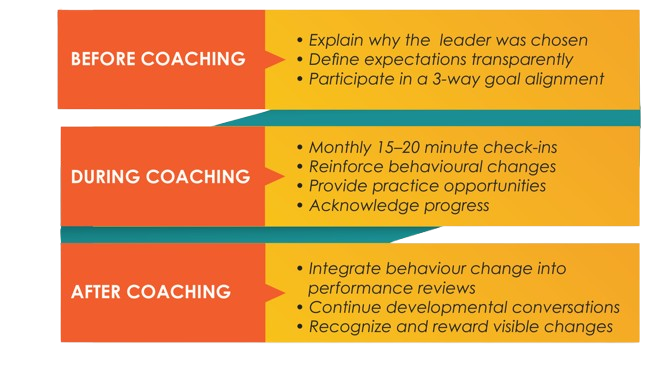
Before: agree the mandate: Bring the leader, sponsor and coach together, with HR involved where appropriate. Explain why coaching is being offered. Agree two or three goals, what progress should look like and how it will be reviewed.
During: make practice possible: Schedule a short monthly check-in. Create opportunities to practise through a stakeholder meeting, delegation decision or cross-functional assignment. Give specific feedback on what you observed and recognise progress.
After: sustain the change: Review the agreed outcomes using stakeholder feedback and relevant business indicators. Identify which behaviours need continued reinforcement and who will support them after coaching ends.
How HR Should Choose an Executive Coach
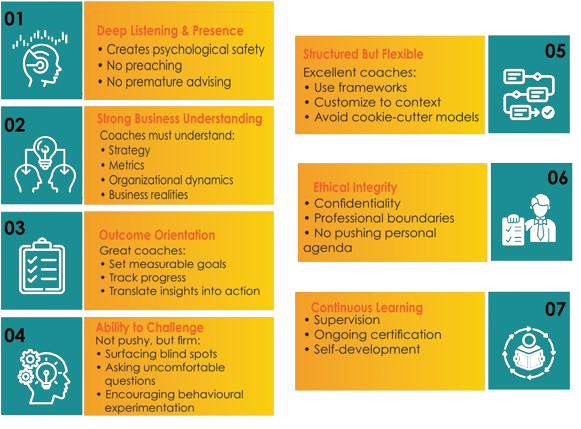
Assess credentials alongside the coach’s ability to understand the leader’s business and turn reflection into action. In my survey, 62% identified insufficient business and organisational understanding as an area to strengthen.
Five questions for your shortlist
Business context: how would you explore this leader’s commercial priorities, organisational constraints and stakeholder relationships?
Coaching approach: how do you listen, challenge assumptions and help the leader develop their own judgement?
Application: how will the leader practise new behaviours between sessions?
Measurement: how will you establish a baseline and assess progress against agreed goals?
Boundaries: what will you share with HR and the sponsor, and what stays confidential?